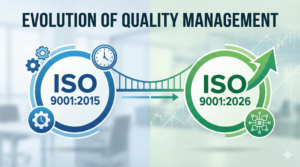
Navigating the Transition: ISO 9001:2015 to 2026
In the ever-evolving landscape of quality management, ISO standards play a pivotal role in ensuring organizations meet both customer expectations and regulatory requirements. As we anticipate the release of ISO 9001:2026, it’s crucial to understand the key changes from the 2015 version and their implications for businesses worldwide. This article explores these changes and what they mean for quality management systems.
Key Updates and Their Impact on Quality Management
The transition from ISO 9001:2015 to ISO 9001:2026 promises significant updates that aim to enhance organizational efficiency and adaptability. Here are the top six changes that quality management professionals should anticipate:
-
Enhanced Risk Management: ISO 9001:2026 is expected to place a stronger emphasis on risk-based thinking, encouraging organizations to integrate risk management more deeply into their processes. This shift aims to foster a proactive approach to identifying and mitigating risks, ultimately enhancing resilience and sustainability.
-
Increased Focus on Digital Transformation: With the accelerating pace of digitalization, the new standard will likely address the integration of digital tools and technologies into quality management systems. This includes guidance on leveraging data analytics, AI, and IoT to drive continuous improvement and innovation.
-
Sustainability and Environmental Considerations: As global awareness of environmental issues grows, ISO 9001:2026 will likely incorporate more explicit references to sustainability. This change encourages organizations to align their quality objectives with environmental goals, promoting sustainable practices across their operations.
-
Greater Emphasis on Stakeholder Engagement: The upcoming standard is expected to broaden the scope of stakeholder involvement, beyond customers to include suppliers, employees, and the community. This holistic approach aims to enhance transparency and foster stronger relationships, ultimately benefiting the organization’s reputation and trust.
-
Adaptation to Remote and Hybrid Work Environments: Recognizing the shift in work dynamics, ISO 9001:2026 will likely provide guidance on maintaining quality management in remote and hybrid settings. This includes ensuring effective communication, collaboration, and process control regardless of physical location.
-
Alignment with Other Management Standards: To streamline integrated management systems, the new standard is anticipated to align more closely with other ISO standards, such as ISO 14001 and ISO 45001. This alignment simplifies the implementation process for organizations adopting multiple standards and enhances overall operational coherence.
As organizations prepare for the transition from ISO 9001:2015 to ISO 9001:2026, understanding these key changes is essential for maintaining compliance and optimizing quality management systems. By proactively addressing these updates, businesses can not only meet the new requirements but also leverage them as opportunities for growth, innovation, and enhanced stakeholder satisfaction. The journey towards the 2026 standard is a step towards a more resilient, sustainable, and digitally-integrated future.